Role of 3D Modeling in Biotech: Driving Scientific Clarity
Most American biotech firms now rely on visual storytelling to win investor trust and drive educational success. Communicating molecular interactions or device designs with clarity often proves difficult using static slides or conventional graphics. With over 60 percent of global life science companies adopting 3D modeling for corporate presentations, biomedical project managers are seeking proven techniques to create persuasive visuals. Discover how 3D modeling turns complex scientific concepts into compelling, investment-ready narratives that speak to both technical and non-expert audiences.
Table of Contents
- Defining 3D Modeling In Biotech Communication
- Key Types: Molecular, Cellular, And Structural Models
- Critical Processes: From Data Collection To Rendering
- Applications In Animation, Education, And Investment
- Risks, Limitations, And Compliance Standards
- Common Pitfalls And Quality Assurance Measures
Key Takeaways
| Point | Details |
|---|---|
| Importance of 3D Modeling | 3D modeling in biotech transforms complex scientific data into clear, interactive visualizations, fostering better communication across various stakeholders. |
| Model Types and Applications | Major model types include Molecular, Cellular, and Structural models, each serving distinct purposes in research, education, and device prototyping. |
| Quality Assurance is Crucial | Implementing rigorous quality assurance measures and comprehensive documentation strategies is essential to maintain scientific integrity in 3D models. |
| Collaborative Approach Recommended | Collaboration with subject matter experts is vital to ensure models accurately reflect current research standards and meet regulatory requirements. |
Defining 3D Modeling in Biotech Communication
Biotech communication requires powerful visual tools to translate complex scientific concepts into comprehensible insights. 3D modeling emerges as a transformative approach, enabling researchers and professionals to represent intricate biological structures with unprecedented clarity and precision. Scientific visualization techniques have evolved dramatically, allowing teams to generate immersive representations of molecular interactions, cellular mechanisms, and anatomical details that traditional 2D graphics cannot capture.
At its core, 3D modeling in biotech represents a sophisticated digital technique for constructing geometrically accurate representations of biological entities. These digital models go beyond static imagery, providing interactive and dynamic visualizations that can simulate complex biological processes in real time. Researchers leverage advanced computational tools to create high-fidelity models that reveal intricate spatial relationships between molecular structures, cellular components, and physiological systems.
The primary applications of 3D modeling span multiple domains within biotech communication. Medical device engineers use these models to prototype innovative solutions, pharmaceutical researchers visualize drug interactions at the molecular level, and clinical educators develop immersive training materials that enhance student understanding. By transforming abstract scientific data into tangible, visually compelling representations, 3D modeling bridges communication gaps between technical experts, investors, patients, and interdisciplinary teams.
Pro tip: When developing 3D biotech models, prioritize scientific accuracy and collaborate closely with subject matter experts to ensure every visual detail reflects current research standards.
Key Types: Molecular, Cellular, and Structural Models
3D modeling in biotech encompasses three fundamental model types that revolutionize scientific visualization and research capabilities. Advanced biofabrication techniques have enabled researchers to create increasingly sophisticated representations that capture the intricate complexity of biological systems across different scales and perspectives.
Molecular Models represent the smallest and most precise level of biological representation. These digital constructs focus on visualizing atomic and molecular interactions, protein structures, and complex biomolecular mechanisms. Pharmaceutical researchers utilize these models to understand drug binding, analyze enzyme interactions, and explore intricate molecular dynamics that influence cellular behavior. By rendering molecules in three-dimensional space, scientists can examine spatial relationships, potential interaction sites, and structural configurations impossible to perceive through traditional two-dimensional imagery.
Cellular and Tissue Models provide a more comprehensive view of biological systems. In vitro tissue modeling includes sophisticated representations like spheroids, organoids, and engineered tissue constructs that mimic actual physiological environments. These models are critical for drug screening, disease modeling, and understanding complex cellular interactions. Researchers can simulate miniature versions of organs, study disease progression, and test potential therapeutic interventions with unprecedented precision and detail.
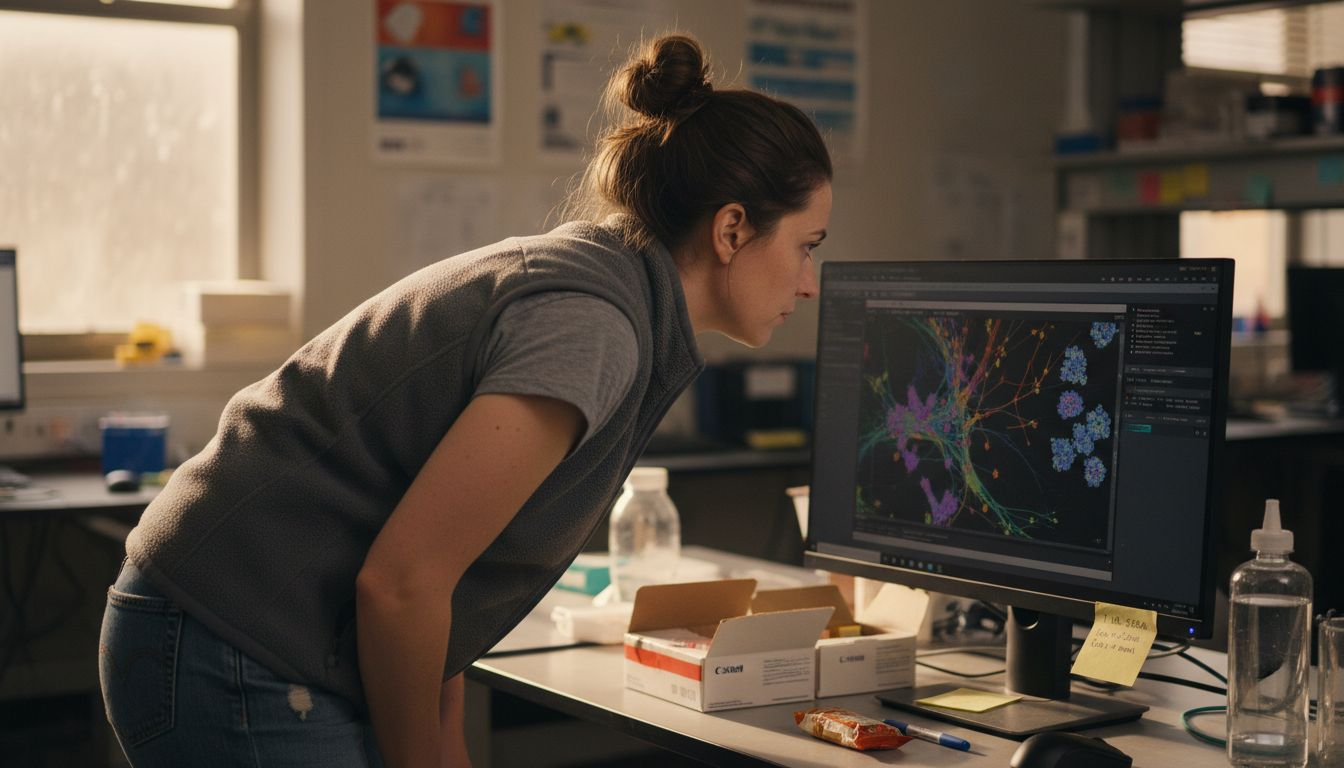
Structural Models focus on larger-scale biological architectures, representing entire organ systems, anatomical structures, and complex physiological networks. Medical device engineers and clinical researchers use these models to prototype innovative solutions, analyze biomechanical interactions, and develop advanced diagnostic and therapeutic technologies. By creating accurate three-dimensional representations, these models bridge the gap between theoretical understanding and practical application in medical research and healthcare innovation.
Pro tip: When developing complex 3D biotech models, integrate multiple visualization techniques and collaborate across disciplines to ensure comprehensive and scientifically accurate representations.
Here’s a summary of key 3D model types and their unique contributions to biotech communication:
| Model Type | Primary Focus | Main Users | Unique Contribution |
|---|---|---|---|
| Molecular | Atomic interactions | Pharmaceutical researchers | Analyze drug binding and protein dynamics |
| Cellular/Tissue | Cellular structures | Academic researchers | Simulate disease and test drug responses |
| Structural | Organ systems, anatomy | Medical engineers, clinicians | Prototype devices, train students effectively |
Critical Processes: From Data Collection to Rendering
3D modeling in biotech is a meticulously structured process that transforms raw scientific data into sophisticated visual representations. Advanced data acquisition techniques are critical for creating accurate and scientifically rigorous digital models that capture the intricate details of biological systems.
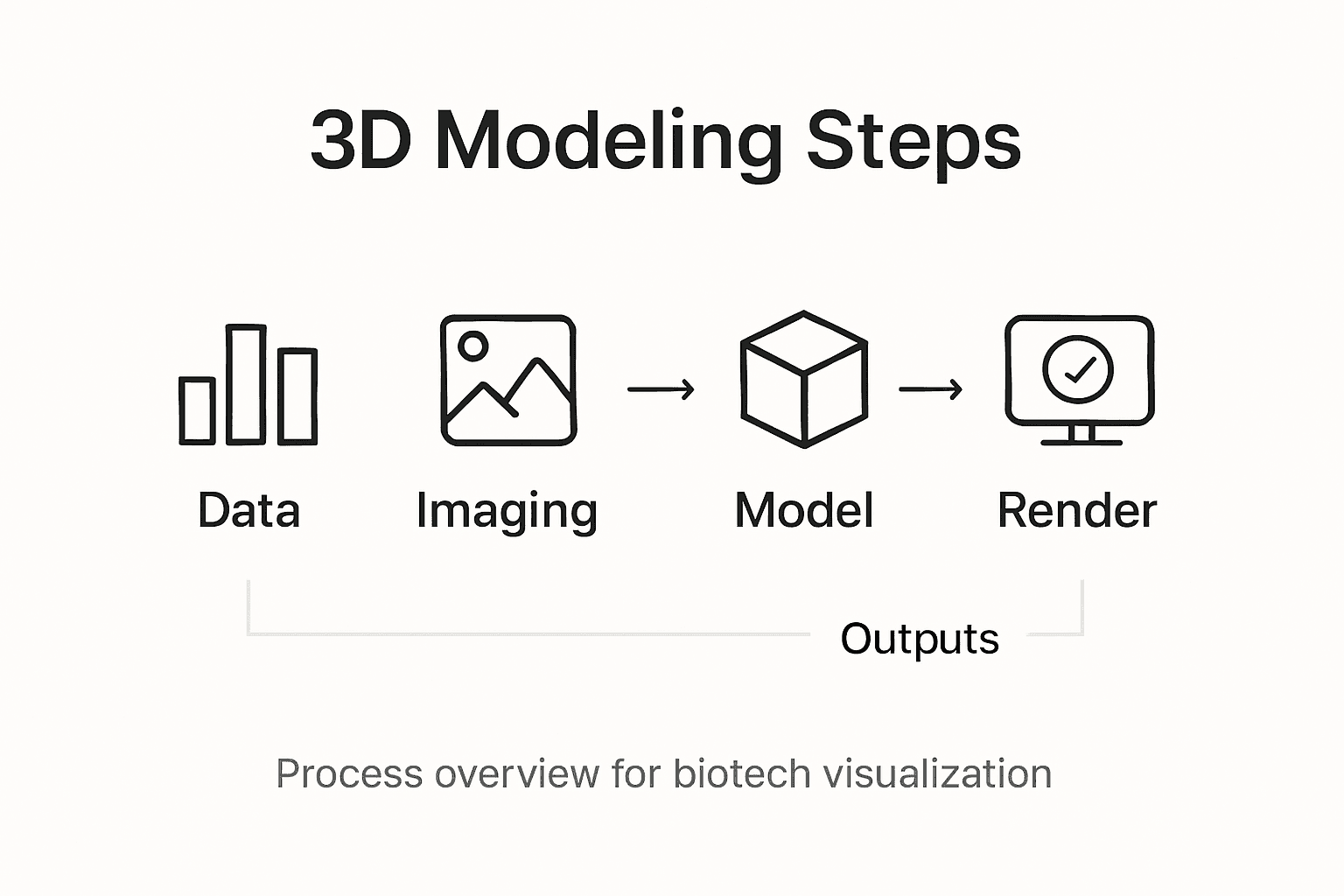
The first stage involves comprehensive data collection, which requires specialized imaging technologies like computed tomography (CT) scans, magnetic resonance imaging (MRI), and high-resolution electron microscopy. Researchers carefully select and integrate multiple data sources to ensure comprehensive coverage of the biological structure or process being modeled. Each dataset undergoes meticulous preprocessing, where noise is filtered, resolution is enhanced, and potentially incomplete information is reconstructed using advanced algorithmic techniques.
Data processing and rendering represent the most technically demanding phase of 3D modeling. Specialized software platforms like Cinema 4D and Unreal Engine transform raw imaging data into geometrically precise digital representations. Biofabrication methods integrate computational graphics with domain-specific scientific expertise to create models that accurately reflect molecular interactions, cellular structures, and complex physiological networks. Researchers apply sophisticated rendering techniques that simulate lighting, texture, and spatial relationships to produce visually compelling and scientifically accurate representations.
The final stage involves validation and refinement, where interdisciplinary teams of scientists, medical professionals, and visualization experts critically examine the 3D model. They assess its scientific accuracy, visual clarity, and potential utility for research, educational, or clinical applications. This collaborative review ensures that the digital model not only looks impressive but also provides genuine insights into the biological systems being studied.
Pro tip: Invest in high-quality, multidisciplinary teams and cutting-edge visualization tools to transform complex scientific data into compelling 3D models that communicate scientific insights effectively.
Applications in Animation, Education, and Investment
3D modeling has emerged as a transformative tool across multiple domains in biotech, revolutionizing how complex scientific information is communicated and understood. Advanced AI-driven visualization techniques have dramatically expanded the potential for creating immersive, scientifically accurate representations that bridge technical complexity with compelling storytelling.
In animation and educational contexts, 3D models serve as powerful communication instruments. Medical schools and research institutions leverage these digital representations to explain intricate biological mechanisms, cellular interactions, and complex physiological processes. Students and professionals can now explore molecular structures, drug interactions, and disease progression through interactive, three-dimensional visualizations that provide unprecedented insights. These animated models transform abstract scientific concepts into tangible, engaging learning experiences that enhance comprehension and retention of critical biomedical information.
Investment and pitch environments represent another critical application of 3D modeling technology. Biotech startups and research organizations use sophisticated 3D animations to communicate complex scientific innovations to potential investors, stakeholders, and grant committees. These visualizations translate technical research into compelling narratives, helping non-technical audiences understand the potential impact and mechanisms of groundbreaking medical technologies. By converting complex scientific data into visually stunning and scientifically accurate representations, researchers can effectively communicate the value and potential of their innovations.
The medical device and pharmaceutical sectors particularly benefit from these advanced visualization techniques. Researchers can demonstrate intricate device mechanisms, drug delivery pathways, and cellular interactions with unprecedented clarity. These 3D models help streamline communication between engineers, researchers, regulatory bodies, and potential investors, accelerating the path from scientific discovery to commercial implementation.
Pro tip: Develop a robust narrative around your 3D models that connects scientific accuracy with compelling storytelling to maximize engagement across educational, investment, and research contexts.
Risks, Limitations, and Compliance Standards
3D modeling in biotech confronts significant challenges that demand rigorous scientific and regulatory scrutiny. Preclinical testing models require extensive validation to ensure they meet stringent safety and efficacy standards across research and commercial applications.
Technical limitations represent a critical constraint in 3D biotech modeling. Researchers frequently encounter reproducibility challenges, with models struggling to fully replicate complex physiological environments. The high computational and technical complexity of creating accurate 3D representations demands specialized expertise, substantial financial investment, and sophisticated computational infrastructure. Variability in data sources, imaging technologies, and modeling algorithms can introduce subtle inaccuracies that compromise the scientific integrity of the visualization.
Regulatory compliance emerges as a paramount concern in developing 3D biotech models. Pharmaceutical and medical device industries must navigate intricate legal frameworks that mandate comprehensive documentation, validation protocols, and ethical considerations. Government agencies like the FDA require exhaustive evidence demonstrating the scientific accuracy, reliability, and potential clinical relevance of these digital representations. Researchers must meticulously track model development processes, validate data sources, and provide transparent methodological documentation to secure regulatory approval.
The material and ethical dimensions of 3D modeling present additional complexity. Biocompatibility of modeling materials, scalability of production techniques, and potential unintended consequences of digital representations require careful consideration. Researchers must balance technological innovation with responsible scientific practice, ensuring that 3D models do not inadvertently misrepresent biological systems or generate misleading interpretations that could impact medical decision making.
Pro tip: Develop a comprehensive validation framework that documents every stage of 3D model development, emphasizing transparency, reproducibility, and alignment with current regulatory guidelines.
Common Pitfalls and Quality Assurance Measures
3D modeling in biotech demands meticulous attention to detail to avoid critical errors that can compromise scientific integrity. Comprehensive quality assurance protocols are essential to mitigate risks associated with inaccurate biological representations and potential research misinterpretations.
Resolution and Accuracy Challenges represent the most significant pitfalls in 3D biotech modeling. Researchers frequently encounter issues with image quality, data interpolation, and subtle biological nuances that can be lost during digital reconstruction. Low-resolution imaging, inconsistent data sources, and computational limitations can introduce significant distortions that undermine the scientific validity of the model. Advanced calibration techniques and high-precision imaging technologies become crucial in addressing these fundamental challenges, requiring researchers to invest substantial time and resources in validating every aspect of their digital representations.
Standardization and Reproducibility emerge as critical quality assurance measures. Advanced cell culture and modeling techniques demand rigorous documentation, consistent methodological approaches, and continuous monitoring to ensure model reliability. Researchers must develop comprehensive standard operating procedures that cover every stage of model development, from initial data collection to final rendering. This includes establishing clear protocols for data validation, implementing systematic error-checking mechanisms, and creating transparent documentation that allows independent verification of model accuracy.
The integration of artificial intelligence and predictive analytics offers promising solutions to traditional quality assurance challenges. Machine learning algorithms can help identify potential inconsistencies, predict modeling errors, and provide sophisticated validation mechanisms that go beyond traditional manual review processes. These advanced computational techniques enable researchers to detect subtle variations, validate complex biological interactions, and enhance the overall reliability of 3D biotech models.
Pro tip: Develop a multi-layered quality assurance framework that combines advanced computational techniques, rigorous documentation, and interdisciplinary expert review to maximize the scientific integrity of 3D biotech models.
This table contrasts common risks in biotech 3D modeling with effective quality assurance measures:
| Common Risk | Example Problem | Recommended Safeguard |
|---|---|---|
| Low data resolution | Blurred cellular structures | Enhance imaging and validate sources |
| Lack of reproducibility | Models can’t be repeated | Use standardized protocols and review |
| Incomplete documentation | Regulatory delays | Maintain detailed development records |
| Poor material selection | Biocompatibility issues | Collaborate on material choice |
Elevate Your Biotech Communication with Expert 3D Modeling Solutions
The article highlights the crucial challenge biotech professionals face in transforming complex scientific data into clear, precise, and engaging visuals. Whether you are dealing with molecular dynamics, cellular processes, or structural models, conveying this intricate information accurately and compellingly is essential to bridge gaps between researchers, investors, and educators. Pain points like reproducibility, scientific accuracy, and regulatory compliance demand expert handling and innovative visualization techniques.
Animiotics specializes in resolving these exact challenges. Our cinematic quality animations and detailed 3D models bring complex mechanisms of action and medical device engineering to life with scientific rigor and stunning clarity. By combining advanced rendering tools like Cinema 4D and Unreal Engine with rigorous scientific review and scripting by medical writers, we create visuals that educate, engage, and inspire confidence. Explore our comprehensive solutions tailored for biotech companies, research institutes, and medical device developers at Animiotics.

Ready to transform your scientific data into powerful visual narratives that drive understanding and investment? Visit Animiotics today to discover how our animation-as-a-service subscription plans and interactive 3D models can keep your presentations fresh, accurate, and impactful. Take the next step in mastering biotech visualization and elevate your storytelling with us.
Frequently Asked Questions
What is the role of 3D modeling in biotech communication?
3D modeling plays a crucial role in biotech communication by transforming complex scientific concepts into clear, engaging visual representations. It allows researchers to effectively convey intricate biological structures and interactions, bridging gaps between technical experts and non-technical audiences.
How do molecular models aid in pharmaceutical research?
Molecular models provide a precise visualization of atomic and molecular interactions, helping pharmaceutical researchers understand drug binding, analyze enzyme interactions, and explore molecular dynamics. This insight is essential for developing effective drugs and treatments.
What are the key processes involved in creating a 3D biotech model?
Creating a 3D biotech model involves several key processes: data collection using advanced imaging technologies, data processing and rendering with specialized software, and validation and refinement through interdisciplinary collaboration to ensure scientific accuracy and clarity.
What applications does 3D modeling have in medical education?
In medical education, 3D modeling is used to create visual aids that help explain complex biological mechanisms and physiological processes. These interactive models enhance comprehension and retention of critical biomedical information, making learning more effective.